Yard of the Month - July 2026
Congratulations to Melissa and Darrin of 10600 Gungrove, our July 2026 Yard of the Month!
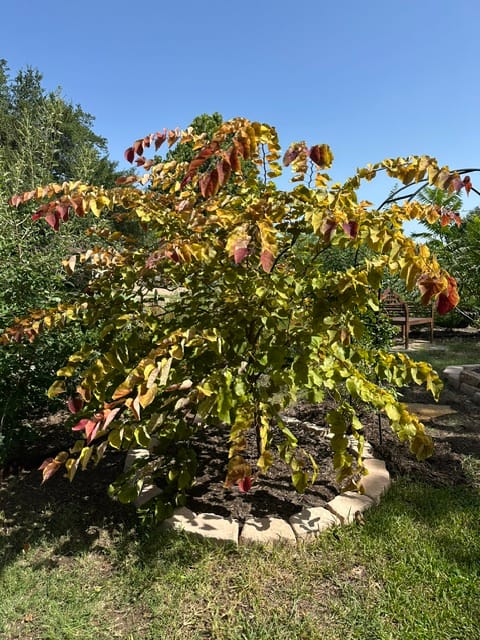
Solitary leaf cutter bees love redbuds for nest material for their larvae.
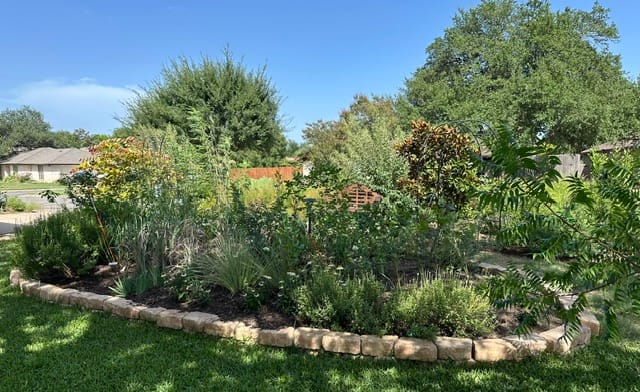
In just six years, they have transformed their landscape into a thriving refuge for local birds, butterflies, bees, and other wildlife. Their beautiful yard is certified by the National Wildlife Federation as a Certified Wildlife Habitat and features an impressive variety of native and well-adapted Texas plants.
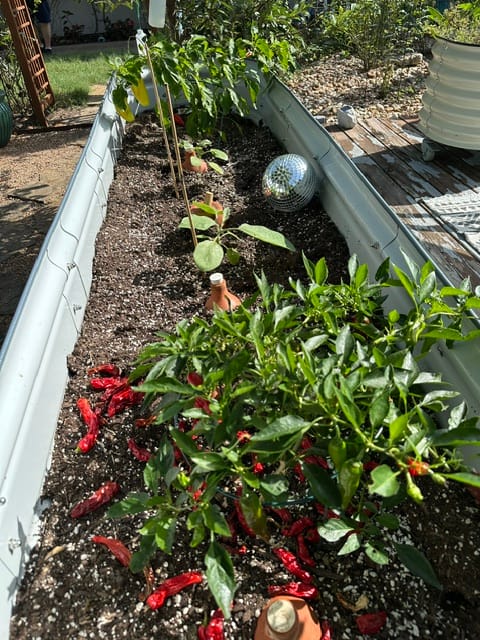
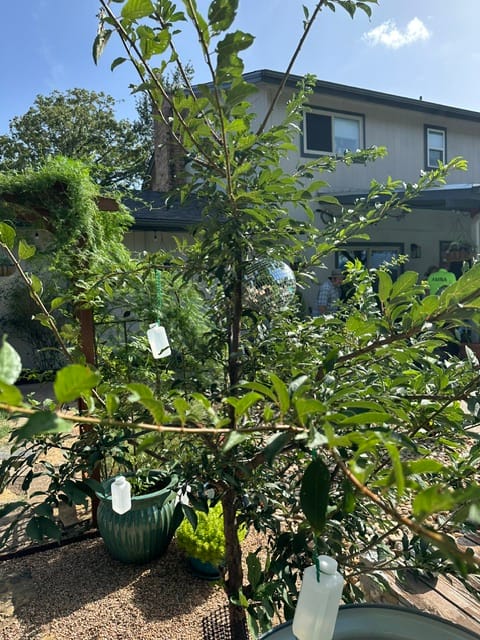
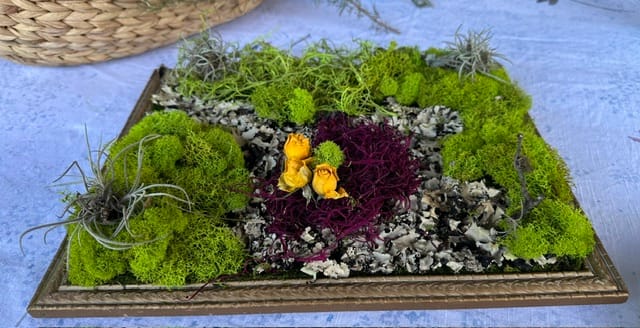
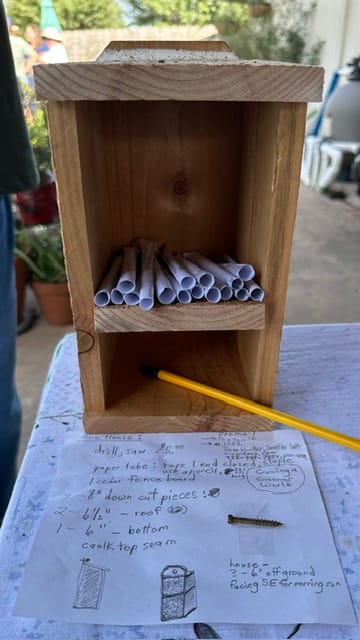
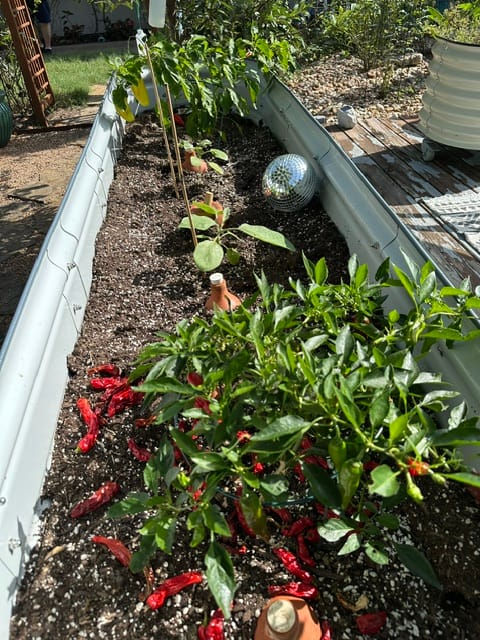
Disco balls are useful to help keep birds away from veggies.
After moving to Anderson Mill from the northern United States, Melissa quickly discovered that gardening in the Texas heat was a whole new challenge. Determined to create a sustainable landscape, she researched plants suited to Central Texas, consulted with a local Master Gardener, and thoughtfully designed a garden that is both beautiful and beneficial to wildlife.
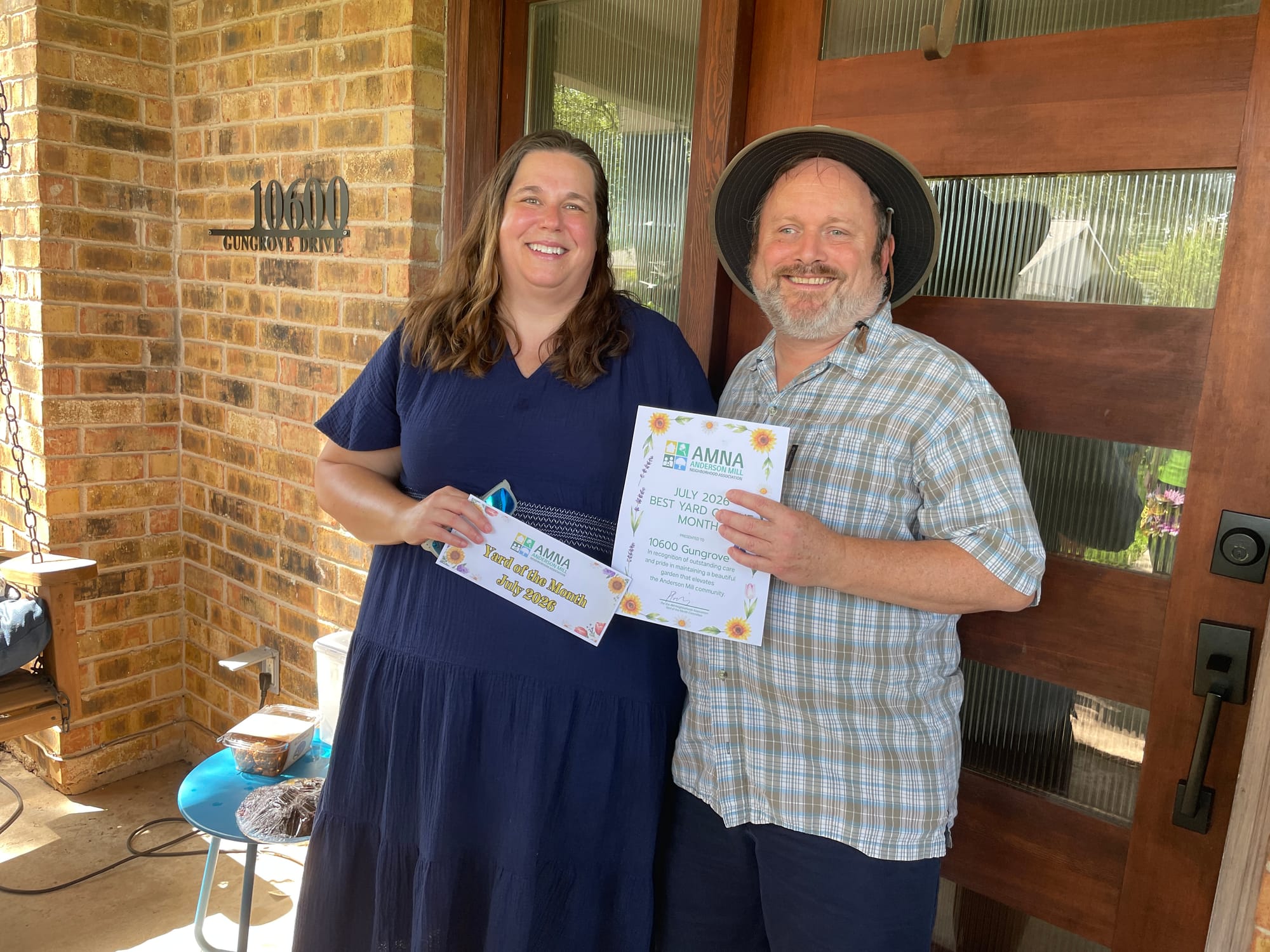
If you would like more information on getting your yard certified, please visit: https://www.nwf.org/Native-Plant-Habitats/Create-and-Certify
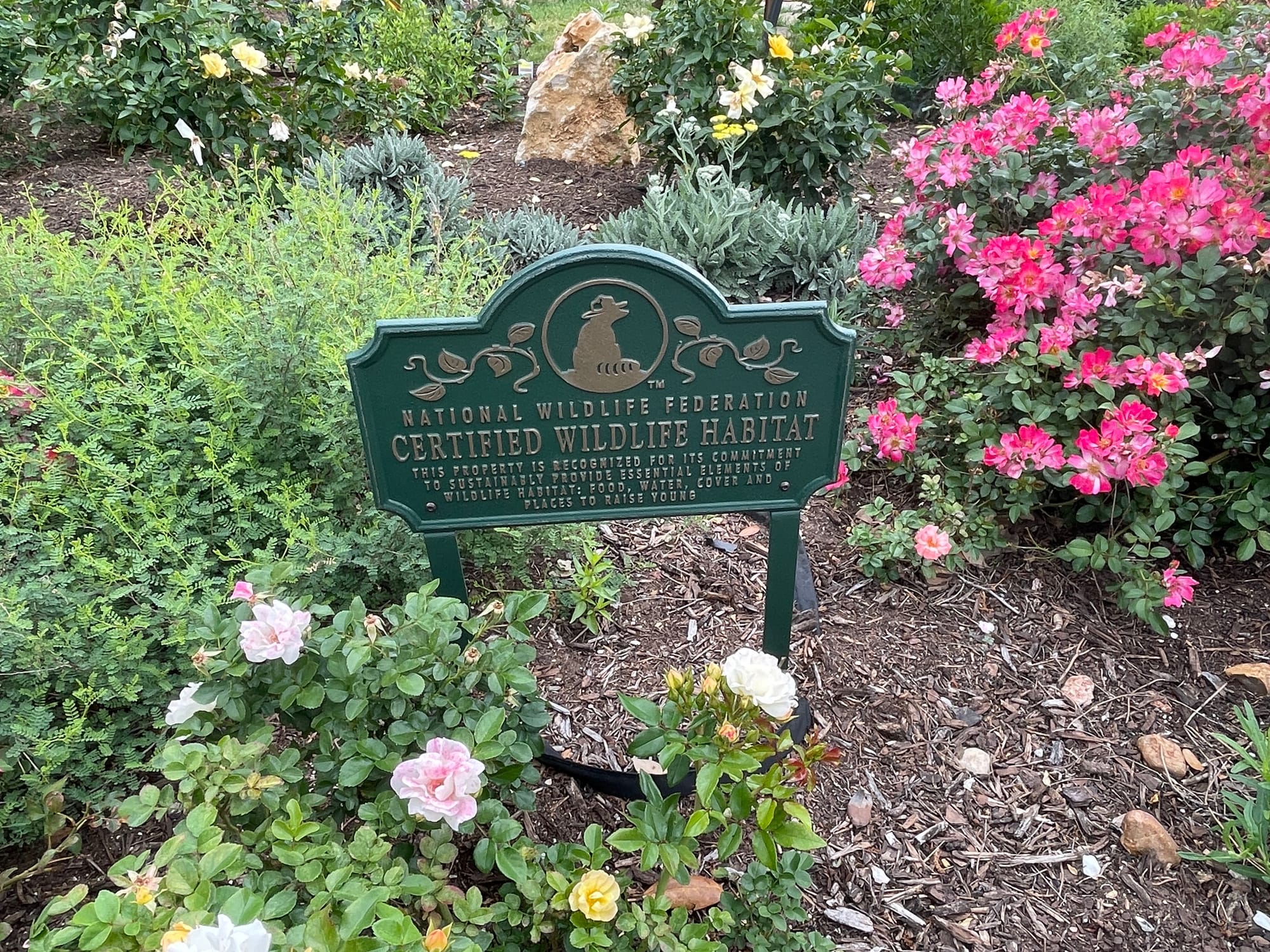
There are five requirements for certification:
- Food - Help to provide the basic food for wildlife. This can include feeders as well as native plants. Melissa suggests flame sumac, yaupon holly, barbados cherry and almond verbena.
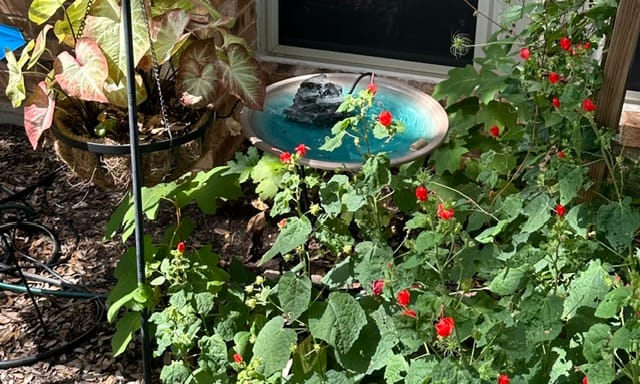
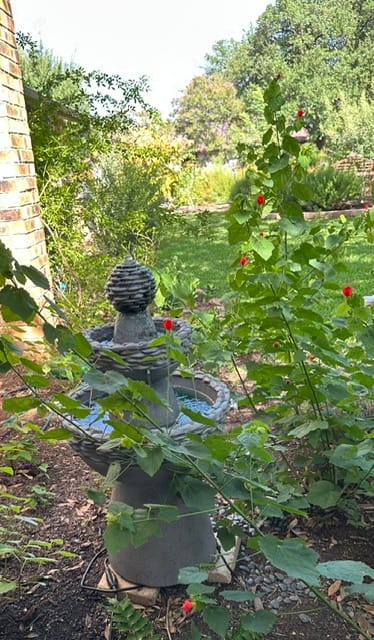
- Water - Fountains with clean water for drinking and bathing. You may want to set up some hanging plants to provide birds a place to perch nearby. Mosquitoes prefer to lay their eggs in stagnant water, so if you keep the bird’s water source fresh, you won’t have an issue with mosquitoes.
- Cover - Understory trees and shrubs to give birds places to shelter from bad weather (and predators).
- Places to raise young - Tall trees and understory trees for places for courtship behavior, mating and places to nest and for fledglings to hide after they’ve left the nest.
- Sustainable garden practices - How you manage your garden can affect soil health, air, water and wildlife habitat. Melissa likes to use compost tea, seaweed, and bio-tone starter to soften the soil around the hole after planting so that plant roots have an easier time growing. Also try out drought-tolerant native plants and rainwater harvesting for the reduction of use of potable water.
Melissa emphasized that she likes her garden to be able to provide pollinators nectar all throughout the year if possible. She has several magnolia trees, and pointed out that magnolias evolved over time to be pollinated by ancient insects which then evolved into our modern beetles! Bees act as great pollinators but other animals also fill that role, including wasps, moths, bats…and those beetles. :) She likes to use the chop and drop method for pruning time (typically in April) where she trims plants that need it and leaves the cuttings on the ground as is. This helps to build compost for the soil and habitat for insects (the lizards love that!)
For plant species that you may want to consider for your garden, here’s a list of what Melissa has planted:
Anacacho Orchid Tree, Apricot Desert Globe Mallow, Autumn Sage, Azure Blue Sage, Beauty Berry, Blackfoot Daisy, Bushy Lippia, Coreopsis, Cow Pen Daisy, Desert Willow Tree, Dwarf Cherry Barbados, Dwarf Yaupon Holly, Eve's Necklace Tree, Fall Aster, Fall Obedient Plant, False Pink Yucca, Flame Sumac Tree, Fragrant White Mist Flower, Frostweed, Gregg's Mist Flower, Horse Herb, Inland Sea Oats, Kidneywood, Lindheimer's Senna, Magnolia Tree, Magnus Purple Coneflower, Penstemon, Pink and Red Turk's Cap, Pride of Houston Yaupon Holly, Purple Leather Flower Clematis, Purple Skullcap, Rattle Snake Master, Red and Gold Flame Acanthus, Redbud Tree, Rock Rose, Spineless Prickly Pear, Texas Mountain Laurel, Texas Pink Sage, Texas Star Hibiscus, Texas Walnut Tree, Winecup, and Yarrow.
Member discussion